How Much Does A Building Demolition Cost in the UK?
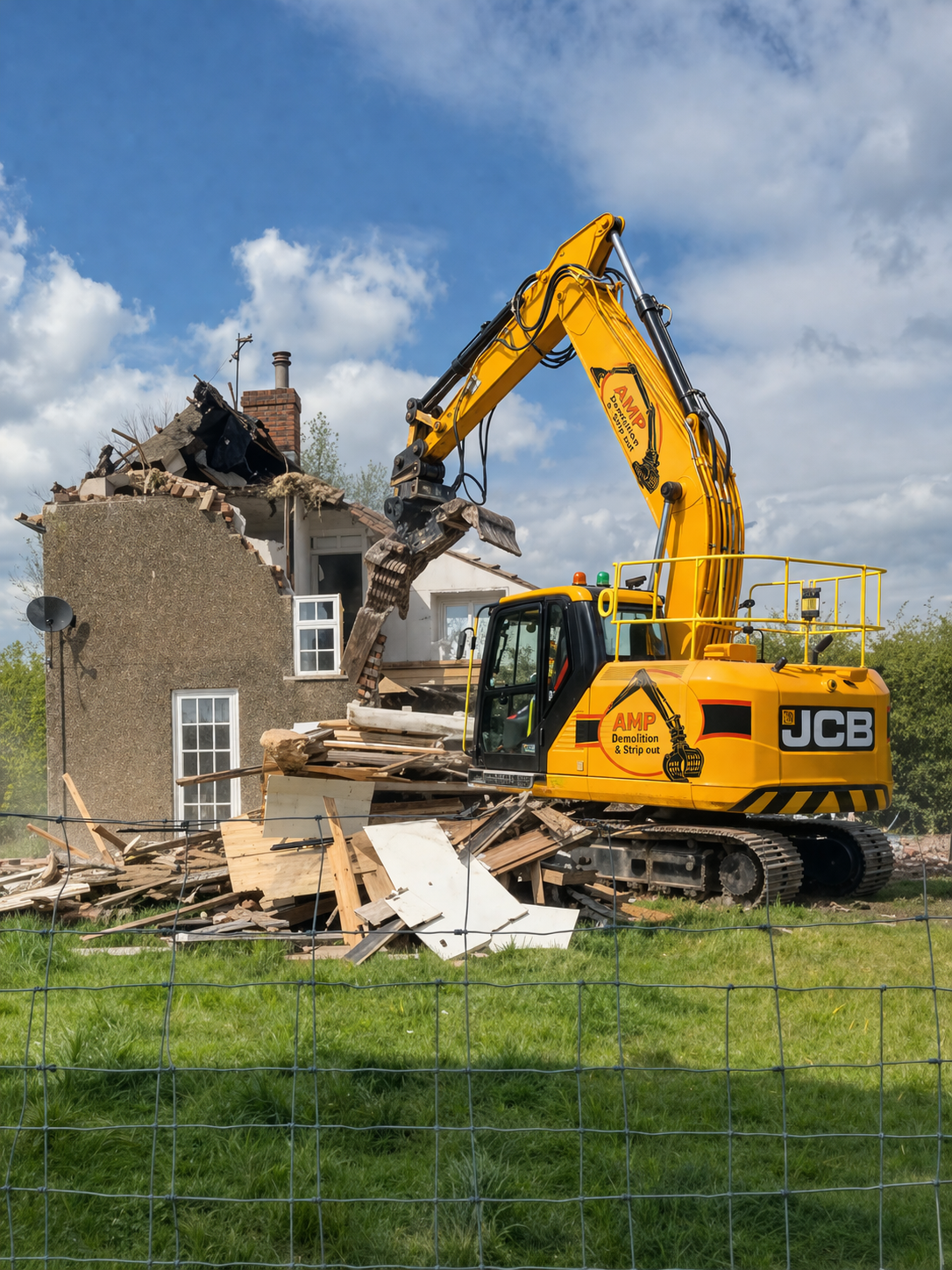
House demolition in sunny Suffolk 2026
If you are planning a demolition project, one of the first questions is usually:
“How much is it going to cost?”
Unfortunately, there isn't a single price that can accurately be applied to every demolition project. Two buildings of a similar size can have very different demolition costs depending on their construction, location, access, asbestos, surrounding properties and what needs to happen to the resulting materials.
At AMP Contractors Ltd, we assess each project individually so that our quotation reflects the actual work required rather than relying on a generic demolition rate.
Here are some of the main factors that can affect the cost of demolishing a building.
1. Size and Construction of the Building
The size of the structure is an obvious consideration, but its construction can be just as important.
A small masonry building may require a relatively straightforward demolition method, while a reinforced-concrete, steel-framed or multi-storey structure can require different plant, attachments, sequencing and additional planning.
The structural condition of the building also needs to be considered. HSE guidance states that a competent person should survey and assess a structure before potentially load-bearing elements are altered, taking into account matters including its age, previous use, construction and nearby structures. HSE
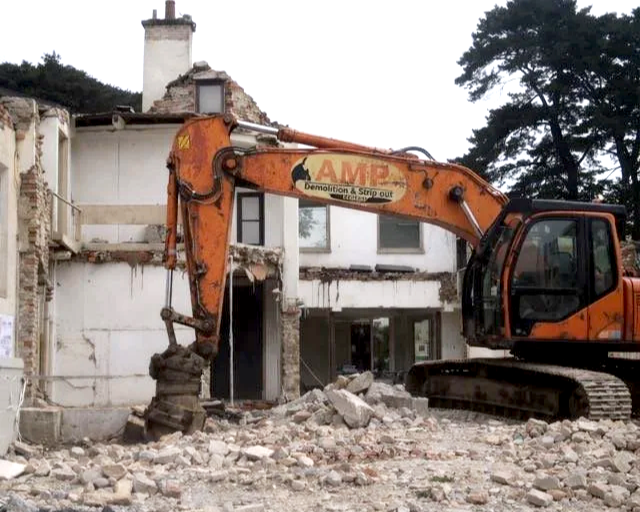
2010 demolition in Sandbanks
2. Site Access
Access can have a significant impact on how a demolition project is approached.
Questions we may consider include whether suitable demolition plant can reach the structure, whether there is sufficient room to operate and process materials, and how skips, equipment and waste vehicles can enter and leave the site.
A building standing on an open site can present a very different project from a similar building surrounded by occupied properties or situated next to a busy road.
3. Asbestos
The presence of asbestos can significantly affect both the preparation and cost of a demolition project.
Before demolition, appropriate asbestos information needs to be available. HSE states that a refurbishment or demolition survey is intended to locate asbestos-containing materials, including materials hidden within the building fabric, before structural work begins. HSE also states that ACMs should be removed, as far as reasonably practicable, before major refurbishment or demolition. HSE
If asbestos is identified, the type, quantity, location and method of removal can all affect the programme and overall cost.
This is one reason why providing the demolition contractor with the relevant asbestos survey at quotation stage can help produce a more accurate price.
4. Services
Gas, electricity, water, telecommunications and other services need to be considered before demolition starts.
Existing services may need to be located, disconnected, isolated or protected depending on the project.
This can become particularly important during partial demolition, where services to another part of a building or neighbouring property need to remain operational.
HSE's demolition guidance identifies information on below-ground live services as part of the pre-construction information that may need to be provided to contractors. HSE
5. Demolition Method
Not every building should be demolished in the same way.
The appropriate methodology will depend on the structure, location and risks associated with the work.
Plant size, specialist attachments, temporary works, working space, neighbouring structures and the required sequence can all influence cost.
HSE guidance requires demolition arrangements to be planned and recorded in writing before demolition or dismantling begins, with the method taking account of the hazards and risks associated with the structure and site. HSE
6. Waste, Recycling and Disposal
Demolition doesn't simply finish when a building reaches ground level.
The resulting materials need to be processed, segregated, removed, recycled, reused or appropriately disposed of.
Depending on the project, materials can include:
Concrete and masonry
Steel and other metals
Timber
Plasterboard
Glass
Fixtures and fittings
General waste
Where suitable, concrete and masonry may be processed for reuse, while metals and other recyclable materials can be separated from the waste stream.
AMP also offers crushing and screening services, either as part of a demolition package or as a standalone service. AMP Contractors
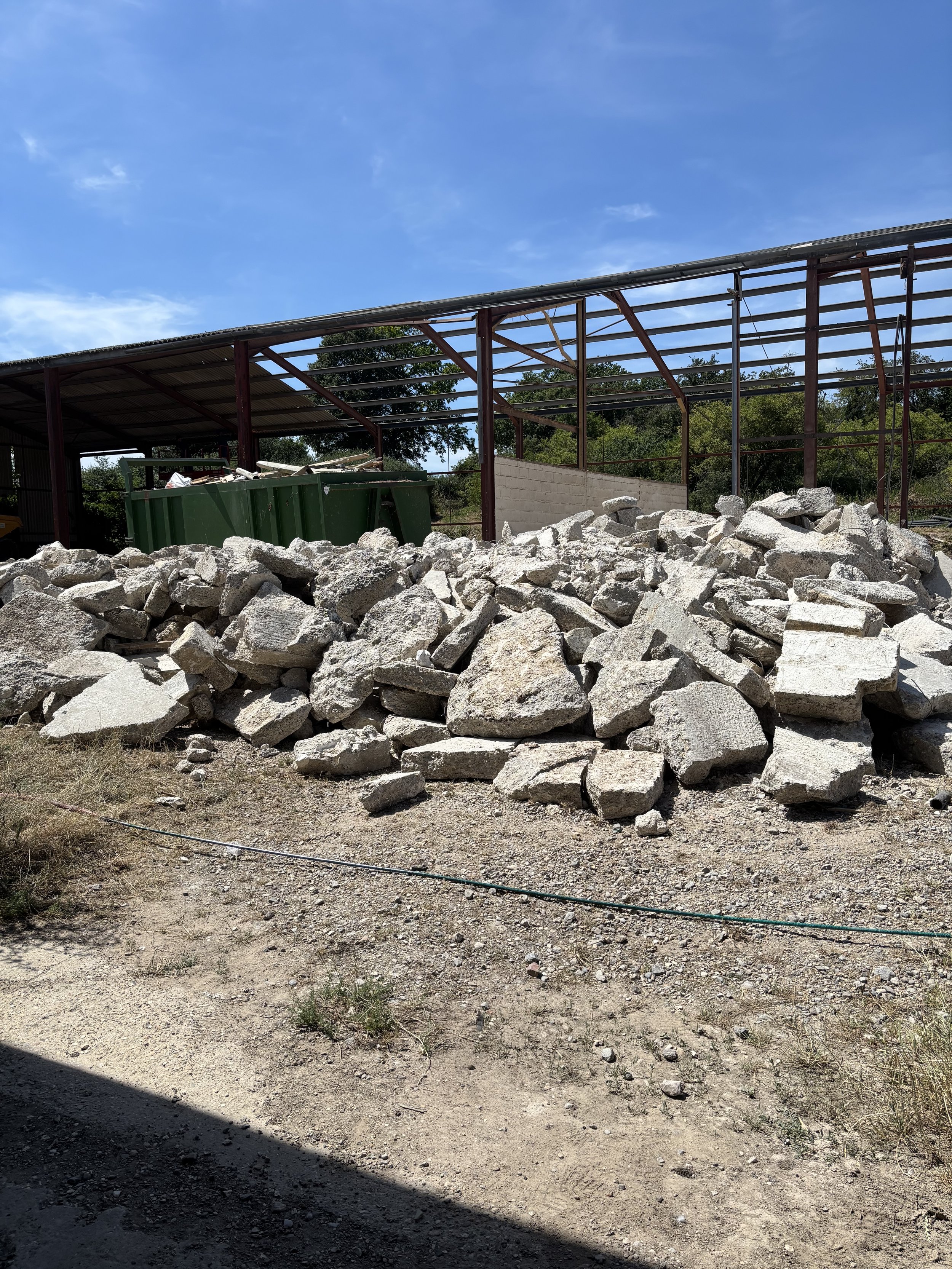
Pre crushed material
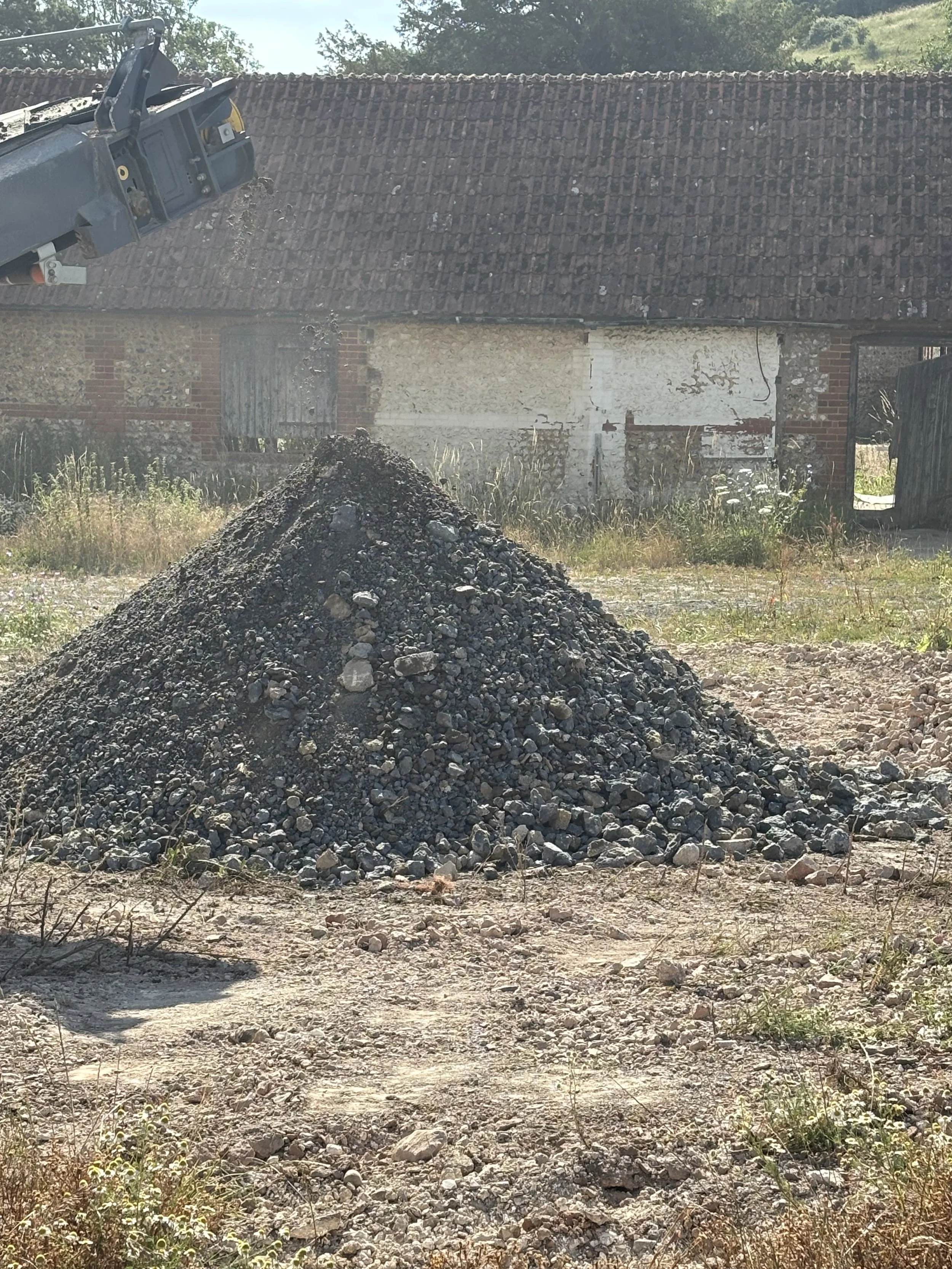
Same material following crushing
7. Location and Surrounding Properties
Where the building is located can have a major influence on the project.
Demolition within a town centre, residential area, school, operational commercial site or close to a public highway can require additional controls compared with an isolated structure.
Noise, dust, vibration, traffic movements, working hours and protection of neighbouring properties or the public may all need to be considered.
For some demolition projects, there can also be local-authority requirements. HSE advises clients to engage with the relevant local authority about demolition requirements and issues such as working restrictions, traffic movements, scaffolding and potential road closures. HSE
8. What Needs to Be Left When We're Finished?
The required end result also affects the quotation.
For example, does the client require the building simply demolished, or does the project also include foundations and slabs?
Does the site need to be crushed and levelled?
Is material being retained on site?
Does everything need to be removed?
Is the site being prepared for another contractor or future development?
Defining the required finish at quotation stage helps ensure everyone is pricing the same scope of work.
So, How Do You Get an Accurate Demolition Price?
The best way is to provide the demolition contractor with as much relevant information as possible.
Where available, this could include site address, photographs, drawings, asbestos information, structural information, scope of works and the required programme.
A site visit can then be arranged where appropriate.
The more information available at quotation stage, the better the contractor can understand the work and identify the plant, labour, methodology, waste arrangements and other resources required.
Looking for a Demolition Quotation?
AMP Contractors Ltd is a family-run demolition and strip-out contractor with more than 25 years' industry experience. AMP Contractors
Based in Suffolk, AMP undertakes demolition and associated works across East Anglia and further afield. AMP Contractors
If you have a building that requires demolition, we'd be happy to look at your project and provide a quotation.
Send us your drawings, photographs and available surveys, or contact us to arrange a site visit.
GET A FREE DEMOLITION QUOTE →